


The Silent Cat Herbarium: Equisetum arvense
Horsetail - Strangely Unchanged
Long before bees drifted from blossom to blossom, before orchards, gardens, or fields of grain shaped the landscape, immense forests of giant horsetails (Calamites) covered the earth.
Their ancestors grew in the steaming swamps of the Carboniferous age, alongside primitive ferns and towering clubmosses, in a world so ancient that even the dinosaurs had not yet appeared.
What remains today is reduced to thin green stems rising from wet soil, from roadsides, from forgotten corners of the landscape. The field horsetail is one of the last surviving descendants of that distant time.

The Horsetail’s Double Form
Unlike flowering plants, the horsetail never developed petals, nectar, fragrance, or fruit. It remained loyal to an older strategy. In spring, pale brownish shoots emerge from the ground carrying spores rather than blossoms. These fertile shoots soon wither away, and only afterward do the green summer stems appear: hollow, segmented, rough with silica, and arranged in repeating whorls that resemble miniature conifers or skeletal structures.
The spores must land on damp ground to survive. Under magnification, each spore reveals delicate ribbon-like bands that expand and contract with changes in humidity, helping them move across the soil until suitable conditions are found. From them develop tiny green structures that produce mobile male cells which swim through moisture toward the female cells. In this sense, the horsetail still carries within itself an echo of an earlier stage of life, when reproduction depended directly on mud, water, and swamp.
Once the spores have been released, the flesh-coloured spring shoots (the spore-bearing stems) wither and die. What follows is something that appears almost like a different plant. From the same underground system emerges a new kind of shoot, entirely green and leafless in the conventional sense, whose only task is to capture sunlight and store energy.

The Form of Discipline
Its structure feels ancient and strangely disciplined. Every segment repeats the next. The plant appears almost geometric, more mineral than lush. It contains unusually high amounts of silica, giving the stems their rough texture and making them useful for centuries as natural polishing tools. Horsetail was used to scrub cooking pots, polish wood, and smooth metal surfaces, earning names such as “scouring rush” and “shavegrass.”
In older forms of natural philosophy, silica was associated with the transmission of light and warmth forces from the cosmos. Rudolf Steiner described quartz- and granite-rich formations in particular as substances capable of receiving and conveying these influences, comparing them to a lens or “burning glass” through which such forces are concentrated and transmitted. Horsetail, being rich in silica, is therefore placed within this same field of associations.
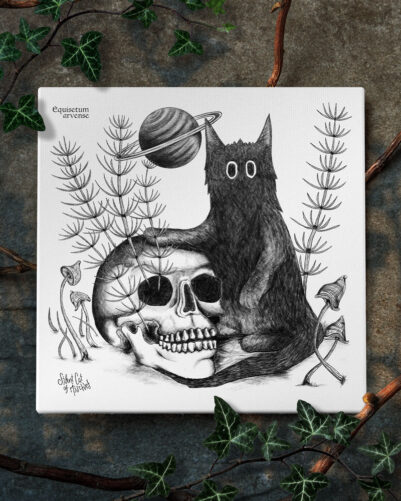
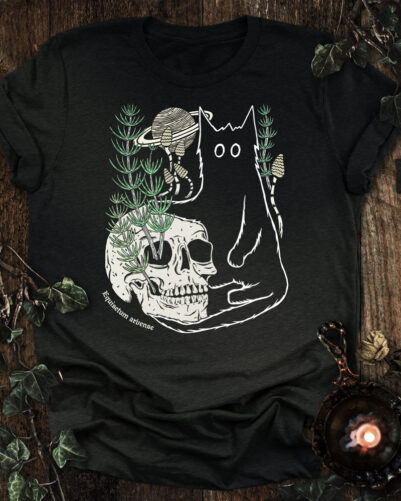
In older symbolic traditions, horsetail was associated with Saturn. Saturn was connected with cooling and slowing processes, with winter, barren landscapes, stone, caves, and all formations in which growth recedes and matter becomes dense, stable, and resistant to change. It is the principle that limits expansion and brings form into clear boundaries.
In the human body, Saturn was linked with the skeleton and other supporting structures: bones, teeth, and the processes of mineralization and ageing. It was understood as the principle that gives the body its fixed framework and enduring form.
This tendency toward fixed form is reflected in crystallization processes and in the geometry of minerals. Snowflakes and crystals, especially in their sixfold symmetry, are characteristic expressions of Saturnian order: repetitive, balanced, and strictly structured.
From this perspective, horsetail appears as a plant in which these same qualities become visible in living form. Its segmented, joint-like stems, its rigid symmetry, and its high silica content give it a character that closely corresponds to this principle of contraction and structural fixation.

Moisture and Dissolution
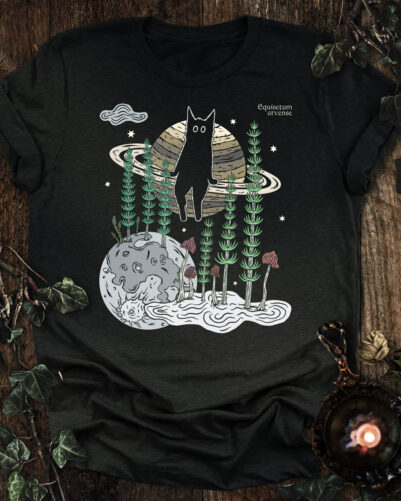
Saturn stood in opposition to the Moon. Where lunar forces were believed to govern moisture, swelling, softness, rapid growth, decay, and the unstable world of fungi and rot, Saturn represented dryness, structure, and resistance to dissolution. In this symbolic framework, it becomes meaningful that horsetail was traditionally used against dampness, fungal diseases, inflammations, leaking wounds, and excessive bleeding. The plant growing in wet places seemed itself to oppose what spreads, softens, rots, or dissolves.
Even in gardening traditions this idea survives in practical form. Horsetail tea and fermented horsetail preparations have long been sprayed on plants suffering from mildew, mold, rust, and fungal infections. The silica-rich plant was thought to strengthen and protect weakened growth, especially in periods of excessive humidity.
Perhaps this is what makes horsetail so compelling. It carries an atmosphere not only of healing, but of endurance. It belongs to a world before flowers and fruit, before cultivated beauty, before softness became dominant in the plant kingdom. A survivor from ancient swamp forests, still rising each spring in the same segmented form it carried hundreds of millions of years ago - austere, repetitive, mineral-like, and strangely unchanged.

How the Plant Was Understood
Folk healers, shamans, and herbalists believed each plant possessed a hidden essence or spirit that revealed its qualities to those able to approach it correctly. Healing knowledge was not believed to emerge through experimentation alone, but through careful observation, ritual, dreams, trance, and lived experience with plants over time.
Traditional herbal medicine repeatedly associated the plant with strengthening what had become weak or porous. Across cultures it was used to staunch bleeding, dry excess moisture, support the kidneys and bladder, strengthen connective tissue, and aid the healing of bones. Its silica-rich nature linked it with hair, skin, nails, teeth, and the skeletal system itself. Folk medicine recommended horsetail teas and washes for brittle nails, dull hair, weak tissue, and slow-healing wounds. Some Indigenous groups are also reported to have used horsetail in animal care, for example to improve the shine of feathers and fur.

Use and Caution
In Europe, roughly ten native horsetail species are distinguished, yet in herbal practice only field horsetail (Equisetum arvense) is considered suitable. It is the form most often found along roadsides, in fields, and in gardens, while closely related species - such as woodland horsetail (Equisetum sylvaticum), great horsetail (Equisetum maximum), winter horsetail (Equisetum hiemale), marsh horsetail (Equisetum palustre), and water horsetail (Equisetum fluviatile) - are usually avoided. The concern is that they may host a parasitic fungus (Ustilago equiseti), visible as dark brown spots, which is associated with toxic compounds.
Because of this, horsetail is not gathered from swampy or shaded woodland environments. Attention is paid to the appearance of the dried plant, which should retain a clear green color without signs of discoloration. Traditionally, only the upper portions of the plant are collected, as the younger shoots are considered the most vital.
Even the plant’s own cycle reflects this distinction. The pale, brownish spring shoots - the fertile, spore-bearing stems - are not used medicinally. After they wither, the green summer shoots emerge from the same underground system: the segmented, silica-rich stems that form the characteristic structure of the plant. It is this later stage that is gathered, typically between late spring and midsummer, when the silica is still present in a more soluble form.
Preparation follows a similarly deliberate rhythm. Horsetail is not simply infused but gently decocted: the dried herb is placed in cold water and then boiled for an extended time, allowing its constituents to be drawn out through heat rather than brief extraction.
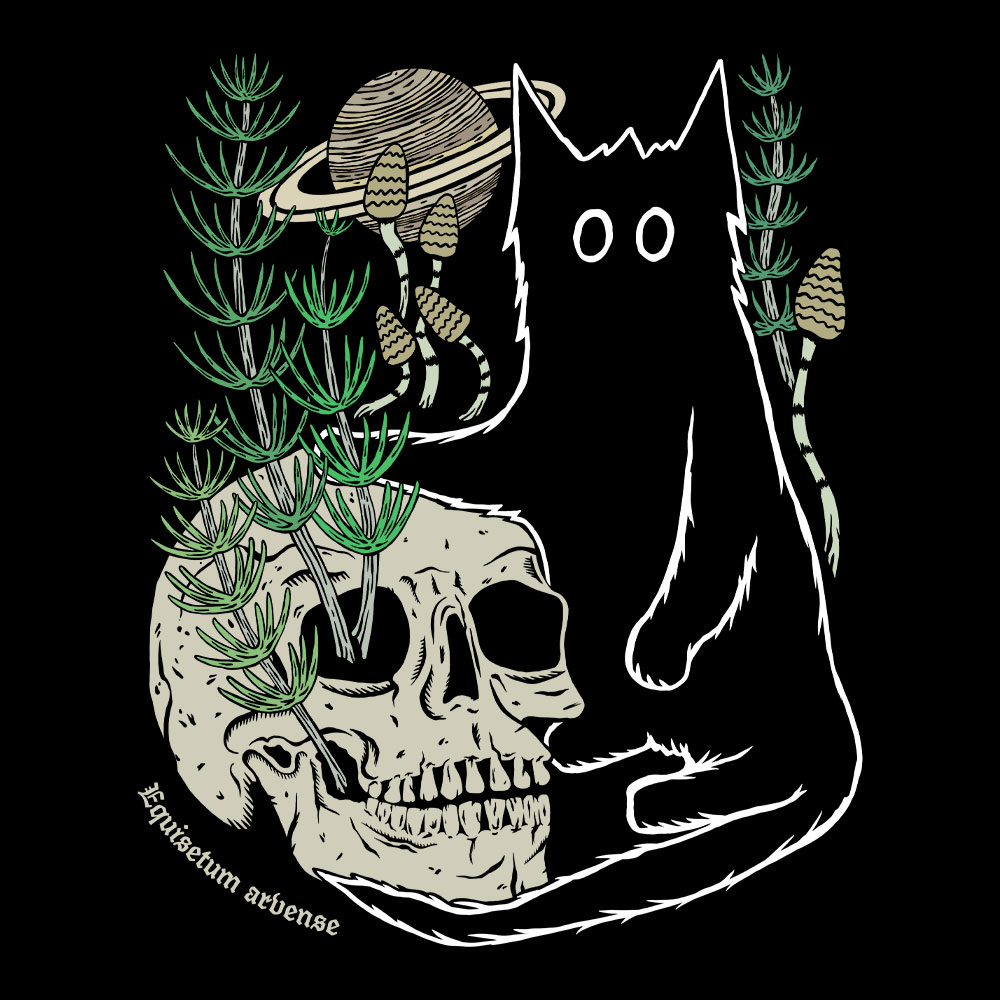
First Use Pending
I have not yet used this plant, so I do not know its taste from experience. I imagine it is not sweet or floral, but rather mildly bitter, dry, and understated. More mineral than aromatic. I will probably begin with the dried herb, partly because I tend to overthink the risks of wild collection, especially in relation to the fungus issue.
What remains striking is how often attention precedes understanding. A plant like horsetail does not only appear as an object of study; it can also become relevant long before it is fully understood.
Sometimes interest arrives first, and meaning follows later. What draws attention is not always random. It can be a form of recognition that has not yet entered conscious awareness. Whether this is coincidence, intuition, or simply sensitivity to patterns remains open. What matters is the impression of something quietly falling into place.
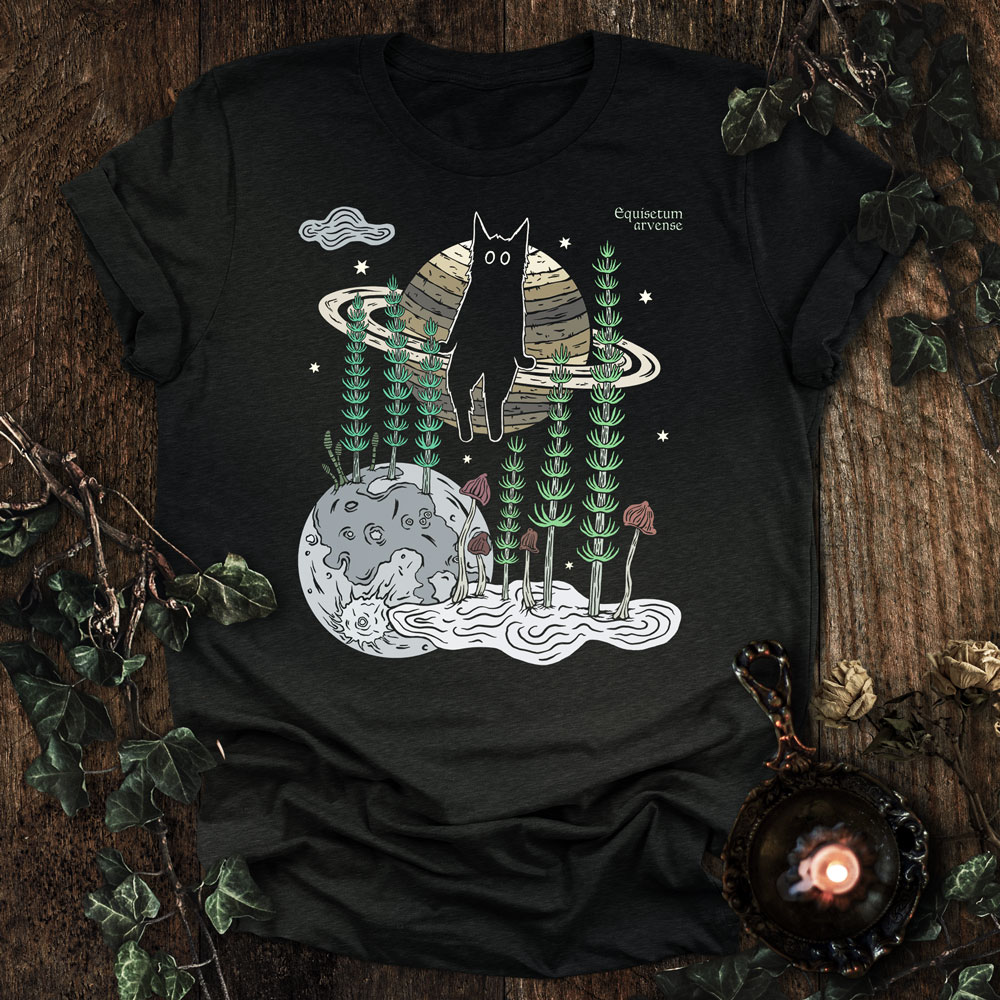

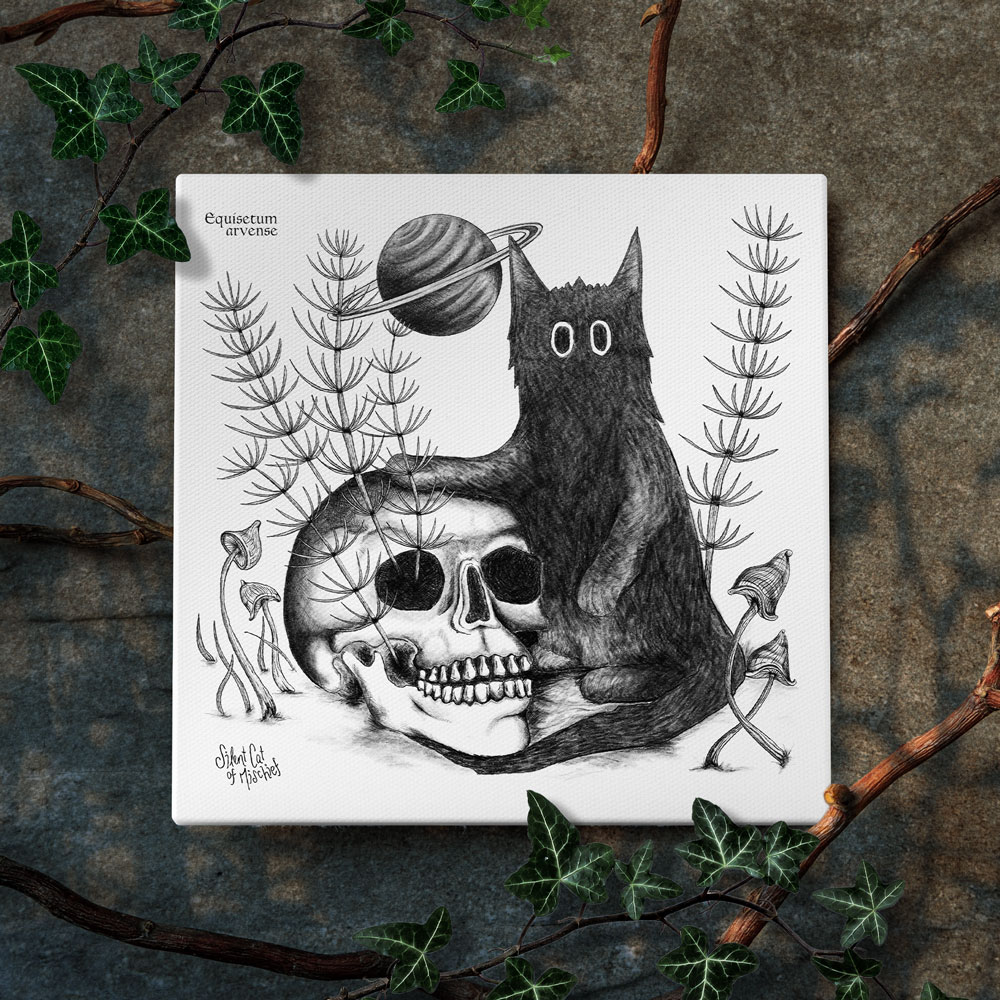
These reflections draw on the writings of Wolf-Dieter Storl, Nicholas Culpeper, Dr. Friedbert Asboga and Maria Treben.
Books
- Wolf Dieter Storl, Heilkräuter und Zauberpflanzen, zwischen Haustür und Gartentor, 2018
- Nicholas Culpeper, Complete Herbal (ed. Steven Foster, 2019)
- Dr. Friedbert Asboga, Astromedizin, Astropharmazie und Astrodiätetik, 2020
- Maria Treben, Gesundheit aus der Apotheke Gottes, 2020



0 Comments